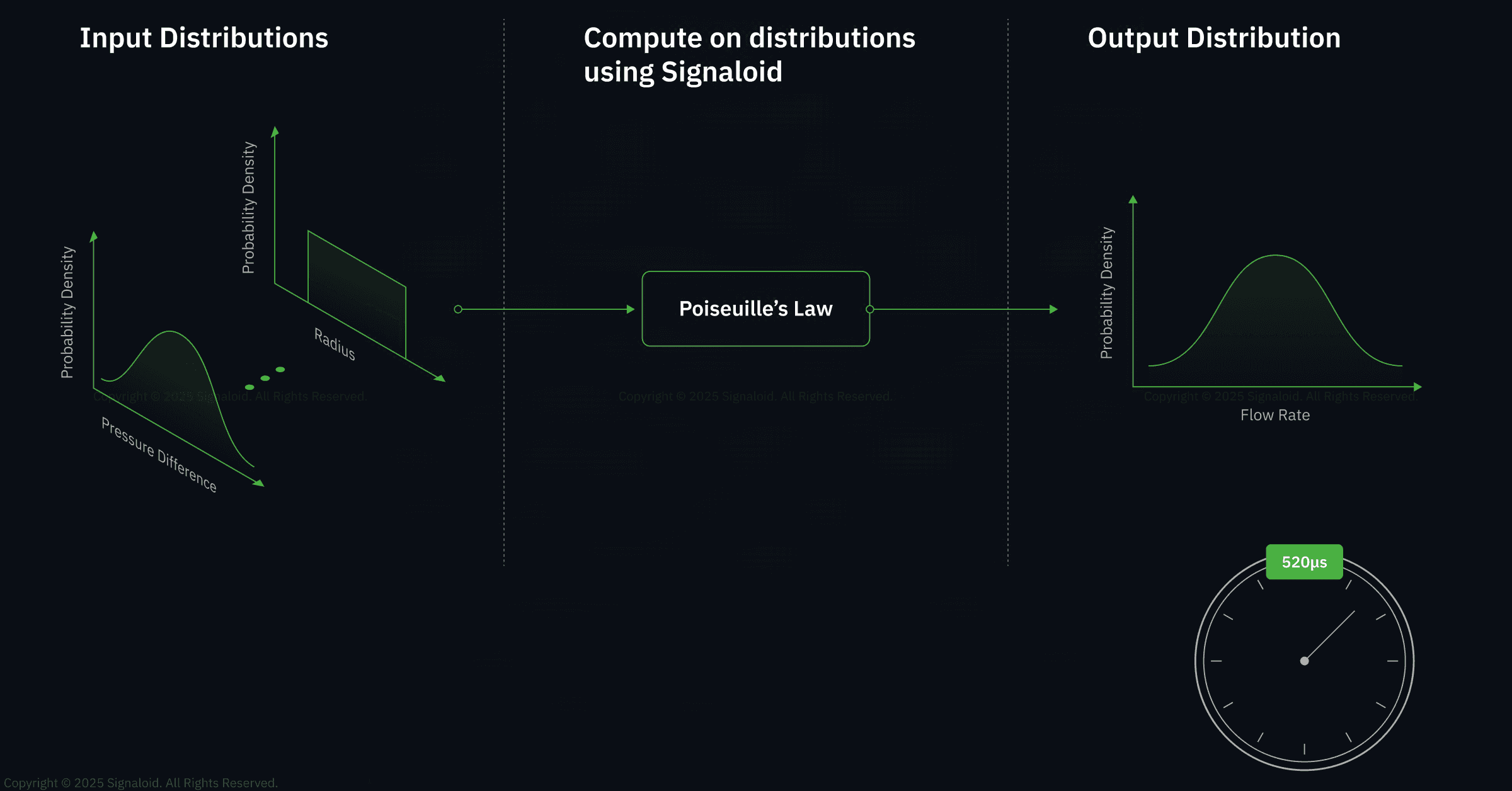
Design with Confidence
Transform your engineering design workflow with Signaloid's UxHw® technology.
Replace Monte Carlo Methods
Replace your computationally-expensive Monte Carlo methods in your engineering design workloads with equivalent or higher-quality methods that take advantage of Signaloid's UxHw technology.
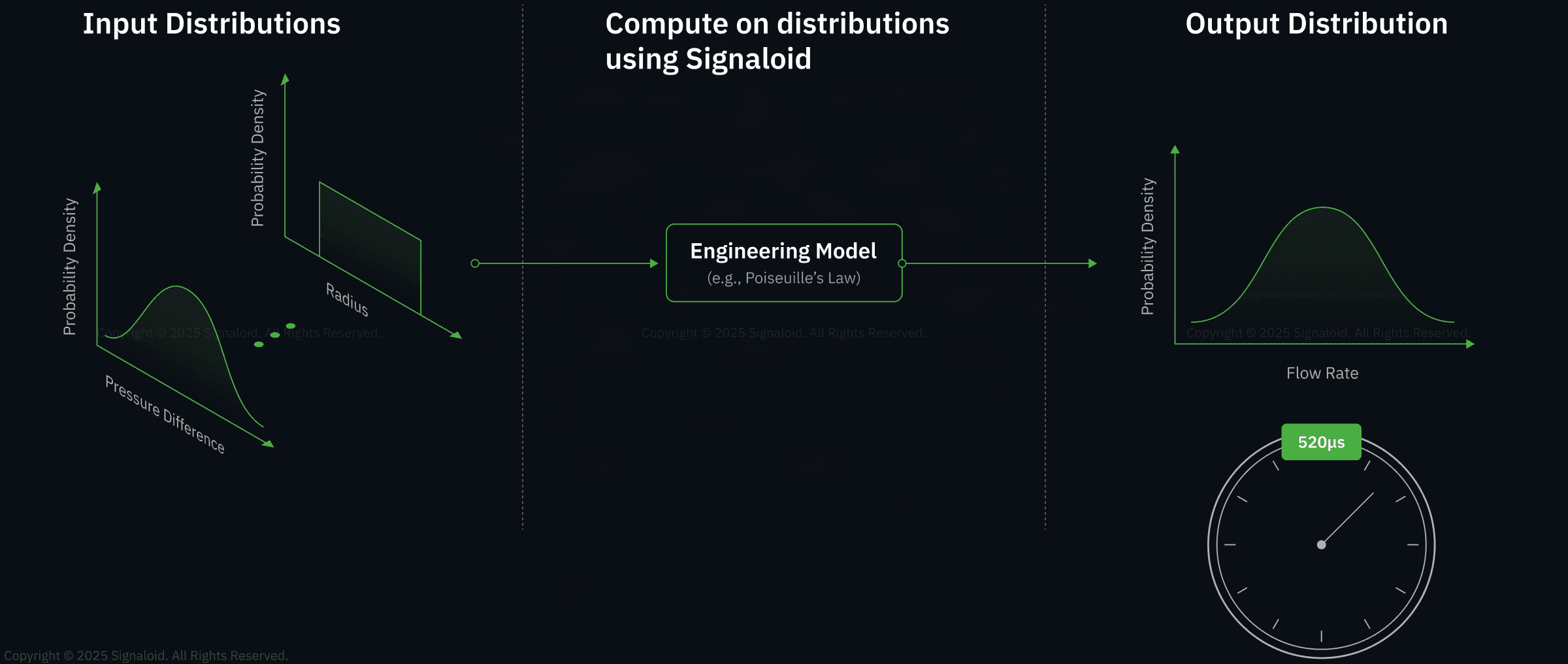
Better Uncertainty Quantification, Same Computing Resources
Or same quality, dramatically faster. Your choice.
Why Uncertainty Quantification Matters
High-stakes engineering demands understanding how parameter uncertainties affect system behavior, ranging from statistical timing analysis and variability analysis in chip design, to tire and engine simulations in motorsports.
Move Beyond Monte Carlo
The Signaloid Cloud Compute Engine transforms how you approach uncertainty quantification, breaking free from traditional computational tradeoffs.
Over
34×
Fewer than
10h
Over
26%
*Factor reduction in non-recurring engineering (NRE) software implementation cost based on Constructive Cost Model (COCOMO) cost estimation methodology. The reduction is an underestimate as the calculation does not include additional modifications required to the Monte Carlo implementation, such as GPU parallelization, that would be required to run the application interactively in real time.
Solutions
Choose how to integrate Signaloid’s UxHw into your technology, with deployment methods including custom hardware modules, such as microSD-sized hot-swappable compute-in-memory modules, or cloud-based solutions using our compute infrastructure.
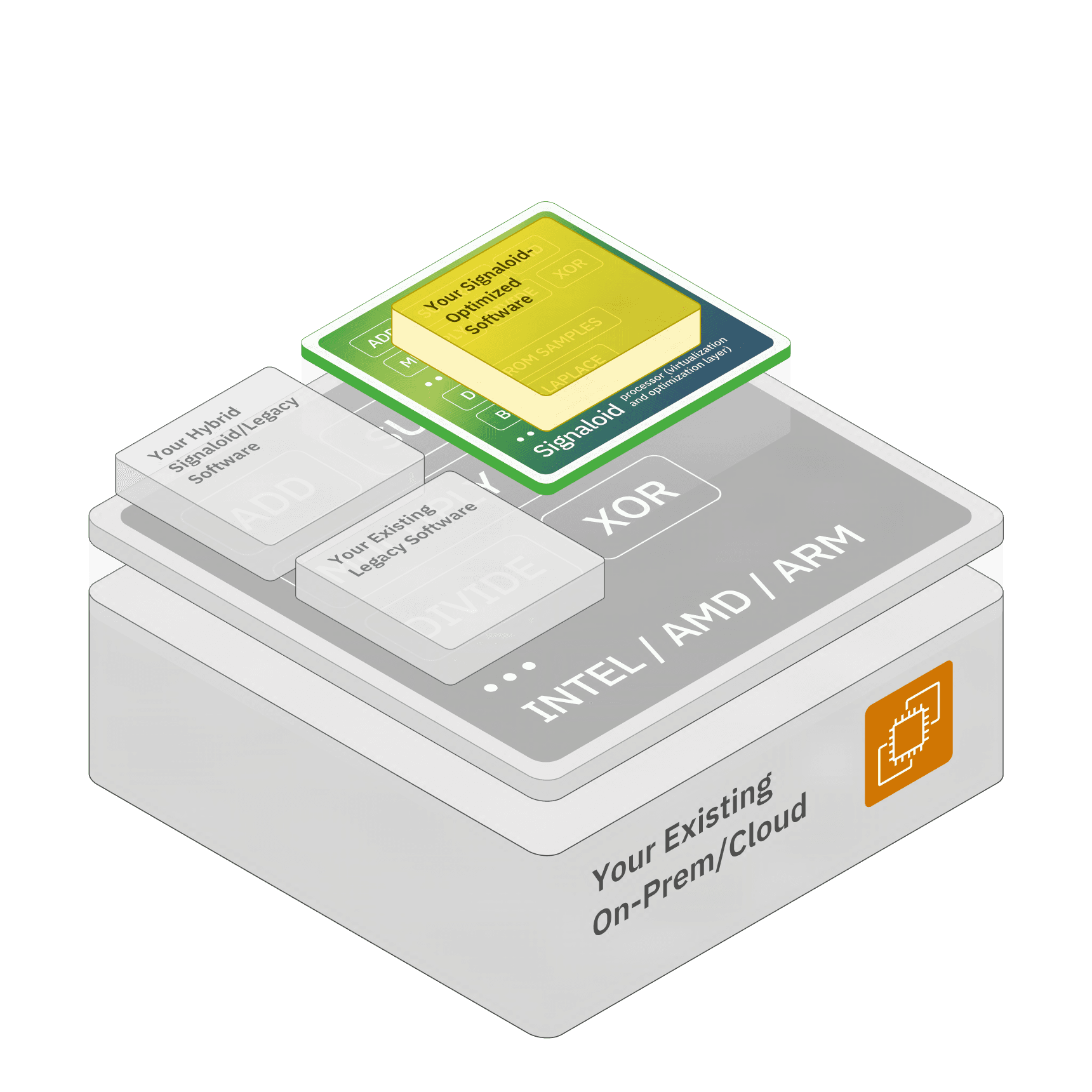
Example Performance Validation
Achieve over 300x speedups in your uncertainty quantification compared with existing C, C++, and FORTRAN models computing Monte Carlo simulations. Interested instead in adopting data-driven AI/ML models to replace your hand-crafted C/C++/FORTRAN code? Use the AI/ML runtime systems which run on the Signaloid cloud compute engine to get automated uncertainty quantification for the output of your AI/ML model predictions. See not just error bars but the full distribution of model output uncertainty.


Technology Explainers
Signaloid's technology provides deterministic uncertainty tracking methods by utilising efficient arithmetic on probability distributions while integrating with existing edge hardware. These technology explainer articles provide further details on how this technology benefits embedded robotics and manufacturing applications, from the underlying mathematics to the engineering implementations.